
Best Age to Start Learning Quran: A Complete Guide for Parents
For many Muslim parents, teaching the Quran is one of the most important parts of raising a child. Yet one question comes up again and again: When should Quran learning actually begin?
Some parents introduce Arabic letters at age three. Others wait until their child starts school. You may also hear that five, six, or seven is the "right" age. Naturally, this can leave parents wondering whether they're starting too early or have already waited too long.
The truth is simpler.
The best age to start learning Quran depends on your child's readiness, attention span, speech development, interest, and the type of Quran learning you want to begin. A child's connection with the Quran can start during the earliest years through listening. For many children, more structured reading becomes practical around ages four to six.
Formal Hifz, detailed Tajweed, and deeper Quranic understanding can develop gradually afterward.
The goal isn't to make your child race through pages. A better goal is to build accurate reading, correct pronunciation, steady learning habits, and a lifelong connection with Allah's Book.
What Age Should a Child Start Learning the Quran?
There is no single starting age that works equally well for every child.
Children develop differently. One four-year-old may happily identify Arabic letters and repeat sounds for fifteen minutes. Another child of exactly the same age may struggle to stay focused for five minutes.
Neither situation automatically means something is wrong.
A practical Quran-learning roadmap looks like this:
| Age | Main Focus | Suitable Quran Learning |
| Birth–2 | Familiarity | Listening to Quran and hearing family recitation |
| 2–3 | Sound exposure | Short duas, repeated words, short Surahs |
| 3–4 | Early foundation | Arabic letters and simple sound recognition |
| 4–6 | Structured beginning | Qaida, Makharij, short Surahs |
| 6–7 | Reading development | Quran reading, fluency, basic Tajweed |
| 7–10 | Stronger Quran skills | Tajweed, independent reading, meaning, possible Hifz |
| 10+ | Continued development | Advanced recitation, memorization, translation, and Tafseer |
Treat these age ranges as a roadmap rather than a deadline.
A child who begins at seven can become an excellent Quran reader. Likewise, beginning at three doesn't guarantee faster or better progress.
Quality of instruction matters more than starting unusually early.
Quran Learning Can Begin Before Formal Lessons
A baby's first Quran experience doesn't require a textbook, teacher, or lesson plan.
It can simply involve hearing Quran recitation at home.
When parents regularly recite, children become familiar with the distinctive sounds and rhythm of Quranic Arabic. They may hear Al-Fatihah during Salah several times each day. Short Surahs can also become familiar long before children understand their meanings.
At this stage, parents don't need to test them.
Think about how children acquire their first language. They listen for months before speaking clearly. Nobody expects a one-year-old to understand grammar.
Early Quran exposure can follow a similarly natural pattern.
The child hears first. Repetition comes next. Reading develops later.
Birth to Age 2: Make the Quran Familiar
During the earliest years, keep Quran exposure natural and peaceful.
Parents can:
- Recite Quran near their child.
- Let them hear clear Quran recitation.
- Read short Surahs regularly.
- Allow them to see family members reading the Mushaf.
- Use simple Islamic phrases such as Bismillah and Alhamdulillah throughout the day.
Avoid turning ordinary listening into formal testing.
A toddler doesn't need a long Quran class. They also don't need pressure to memorize complete Surahs on command.
At this stage, familiarity is enough.
Ages 2 to 3: Introduce Sounds and Simple Repetition
Around ages two and three, children often become enthusiastic imitators.
They repeat words they hear from parents, siblings, and everyday conversations. You can use this natural tendency to introduce simple Quranic sounds and Islamic phrases.
Parents might introduce:
- Bismillah
- Alhamdulillah
- Simple daily duas
- Individual Arabic sounds
- Al-Fatihah through listening
- Al-Ikhlas
- Al-Falaq
- An-Nas
Keep practice short and pleasant.
A child may repeat a verse beautifully one day and forget part of it the next. That's not failure.
At this age, the purpose is familiarity, repetition, and confidence rather than perfect retention.
Ages 3 to 4: Start Building the Arabic Foundation
By age three or four, some children begin showing greater interest in letters, shapes, sounds, and books.
That's often a useful time to introduce the Arabic alphabet.
Start slowly.
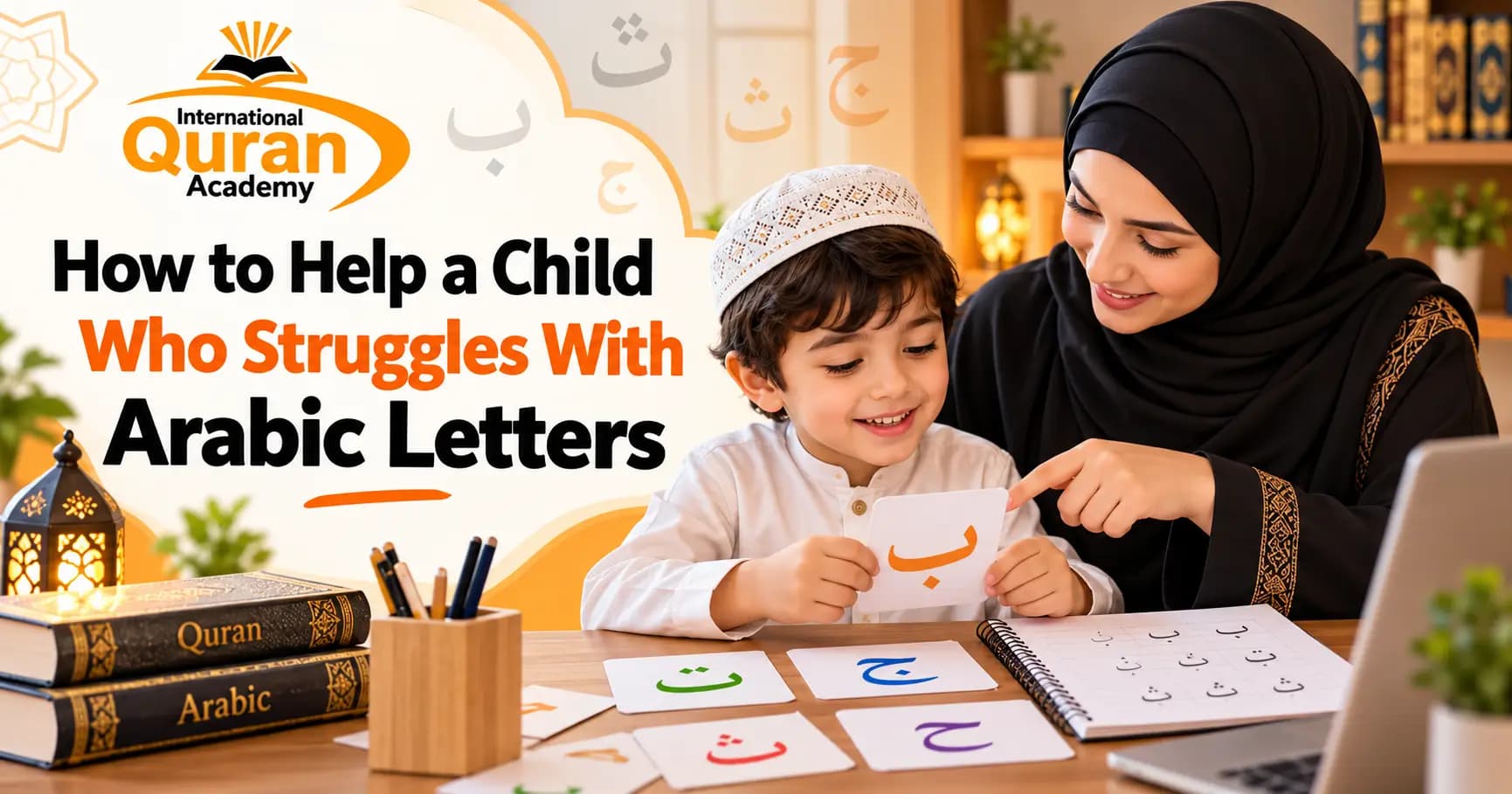
A child doesn't need to master every Arabic letter within a few lessons. Instead, help them recognize individual letters while gradually learning their correct sounds.
For example, an early lesson might introduce:
- ا — Alif
- ب — Baa
- ت — Taa
- ث — Thaa
The teacher shows the letter, pronounces it clearly, and asks the child to repeat it.
Over time, visual recognition and pronunciation begin working together.
Children ready for a more systematic foundation can begin with the Noorani Qaida Course, which teaches Arabic letters, pronunciation, joined letters, Harakat, Sukoon, Madd, Tanween, Tashdeed, and beginner Tajweed skills.
Ages 4 to 6: A Strong Window for Structured Quran Learning
For many children, ages four to six provide a practical window for starting regular Quran lessons.
At this stage, children often become better at following instructions, recognizing patterns, repeating unfamiliar sounds, and remembering previous activities.
A beginner may gradually work on:
- Arabic alphabet recognition
- Correct letter sounds
- Joined letters
- Fathah
- Kasrah
- Dammah
- Tanween
- Madd
- Sukoon
- Shaddah
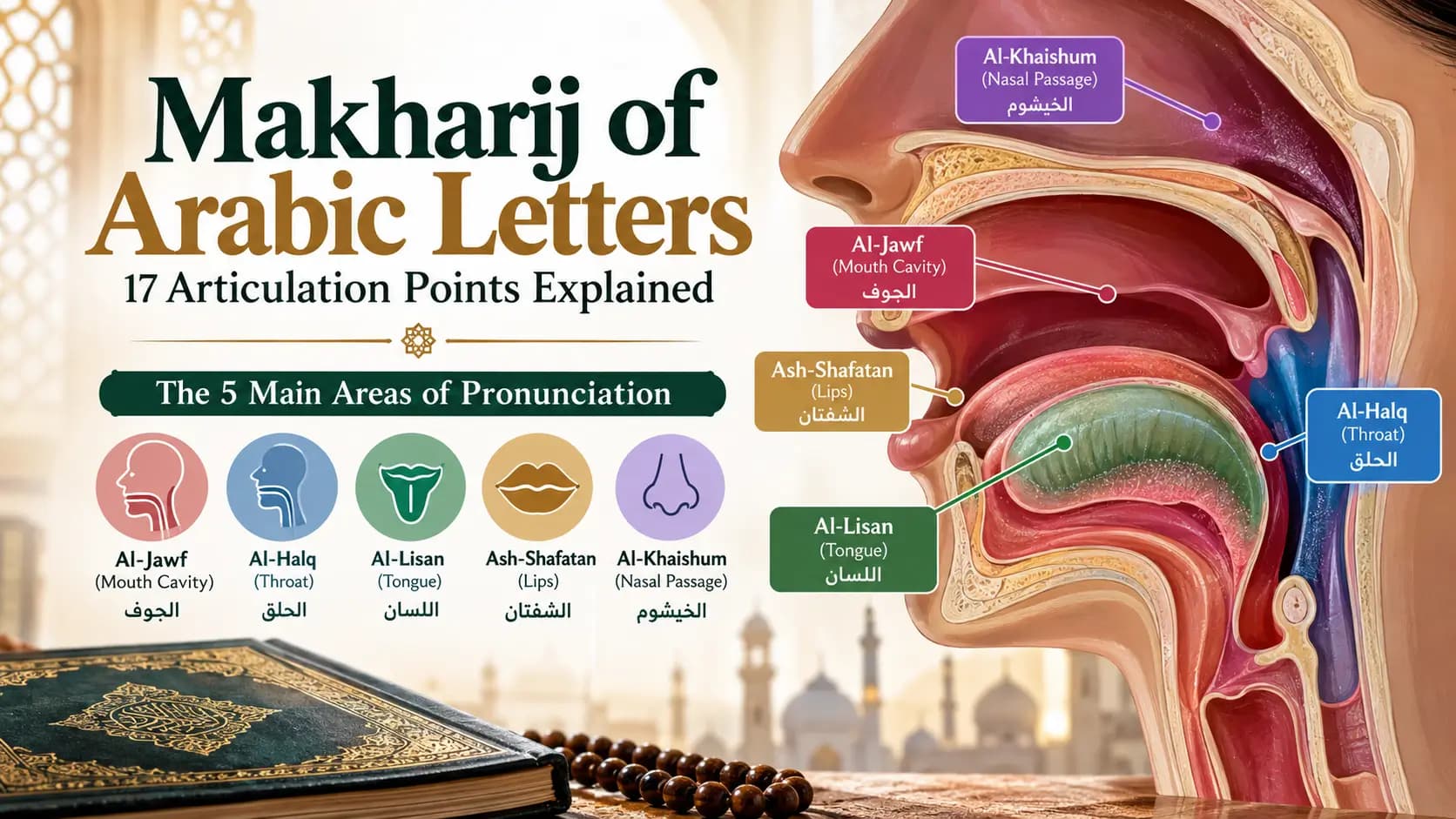
- Basic Makharij
- Short Surah memorization
The important word here is gradually.
Not every five-year-old needs to complete the same number of lessons each month.
If your child needs several lessons to master a difficult Arabic sound, give them that time. Building a correct foundation now can prevent recurring mistakes later.
For children beginning from the alphabet, the academy's Noorani Qaida Course provides a structured path toward Quran reading.
Signs Your Child Is Ready for Quran Classes
Instead of watching only the calendar, watch your child.
Your child may be ready for structured Quran lessons when they can:
- Focus on one activity for several minutes.
- Listen to a teacher and respond.
- Repeat short sounds and words.
- Follow simple instructions.
- Recognize basic visual patterns.
- Remember some previous learning.
- Accept gentle correction.
- Communicate when they're confused.
- Show curiosity about Quran or Arabic.
They don't need perfect concentration.
Young children move around, ask unrelated questions, and occasionally lose focus. That's part of childhood.
Readiness simply means the child can participate enough for meaningful learning to happen.
A Simple Quran Learning Case Study
Imagine two children who are both five years old.
Amina enjoys identifying letters. She repeats Arabic sounds after her mother and can focus on one learning activity for about fifteen minutes.
Yusuf dislikes sitting for structured activities. After a few minutes, he becomes frustrated and stops responding.
Amina may be ready for regular Qaida lessons.
Yusuf might benefit more from five-minute activities, Quran listening, simple letter practice, and a slower transition into formal lessons.
Their ages are identical. Their readiness isn't.
That's why age should guide your decision rather than control it.
Should Children Learn Noorani Qaida Before Reading the Quran?
Most non-Arabic-speaking beginners benefit greatly from a structured Qaida before attempting fluent Quran reading.
Noorani Qaida breaks Quranic reading into smaller, manageable skills.
Children gradually learn the following:
- Arabic letters
- Different letter shapes
- Joined letters
- Harakat
- Tanween
- Madd
- Sukoon
- Shaddah
- Correct pronunciation
- Basic Tajweed principles
The purpose isn't merely to finish a book.
A child should leave Qaida with skills they can actually apply when opening the Quran.
Parents can explore the academy's Noorani Qaida Course for structured beginner instruction.
When Should a Child Move From Qaida to Quran?
Don't judge readiness only by whether your child has reached the final Qaida page.
Look at their actual reading ability.
A child may be ready to progress when they can:
- Recognize Arabic letters quickly.
- Identify letters in joined forms.
- Read basic vowel marks correctly.
- Handle Sukoon and Shaddah.
- Read short Quranic words without constant assistance.
- Produce most Arabic letters correctly.
- Read beginner passages with growing confidence.
Rushing this transition can create long-term weaknesses.
If a child reaches the Quran while still guessing basic words, every page becomes unnecessarily difficult.
Once the foundation is secure, students can progress into the academy's Nazra Quran Course, which focuses on accurate Quran reading, pronunciation, and Tajweed-based recitation.
When Should Children Start Reading Quran Fluently?
Between roughly six and seven, many children begin transitioning from decoding individual words toward smoother Quran reading.
This is where regular practice becomes especially valuable.
The child may already know how to read each word but still pause frequently. Repeated recitation gradually reduces unnecessary hesitation.
Lessons at this stage can focus on:
- Reading complete Quranic lines
- Reducing unnecessary pauses
- Correct vowel pronunciation
- Accurate Makharij
- Smooth transitions between words
- Basic Tajweed application
- Regular revision
Children who have completed their basic reading foundation can continue through the Nazra Quran Course.
Students who want additional focus on recitation style and accuracy can also explore the Quran Recitation Course.
When Should Children Start Learning Tajweed?
Tajweed shouldn't suddenly appear several years after a child begins reading Quran.
Correct pronunciation should develop from the beginning.
However, there's an important difference between practicing Tajweed and memorizing technical Tajweed terminology.
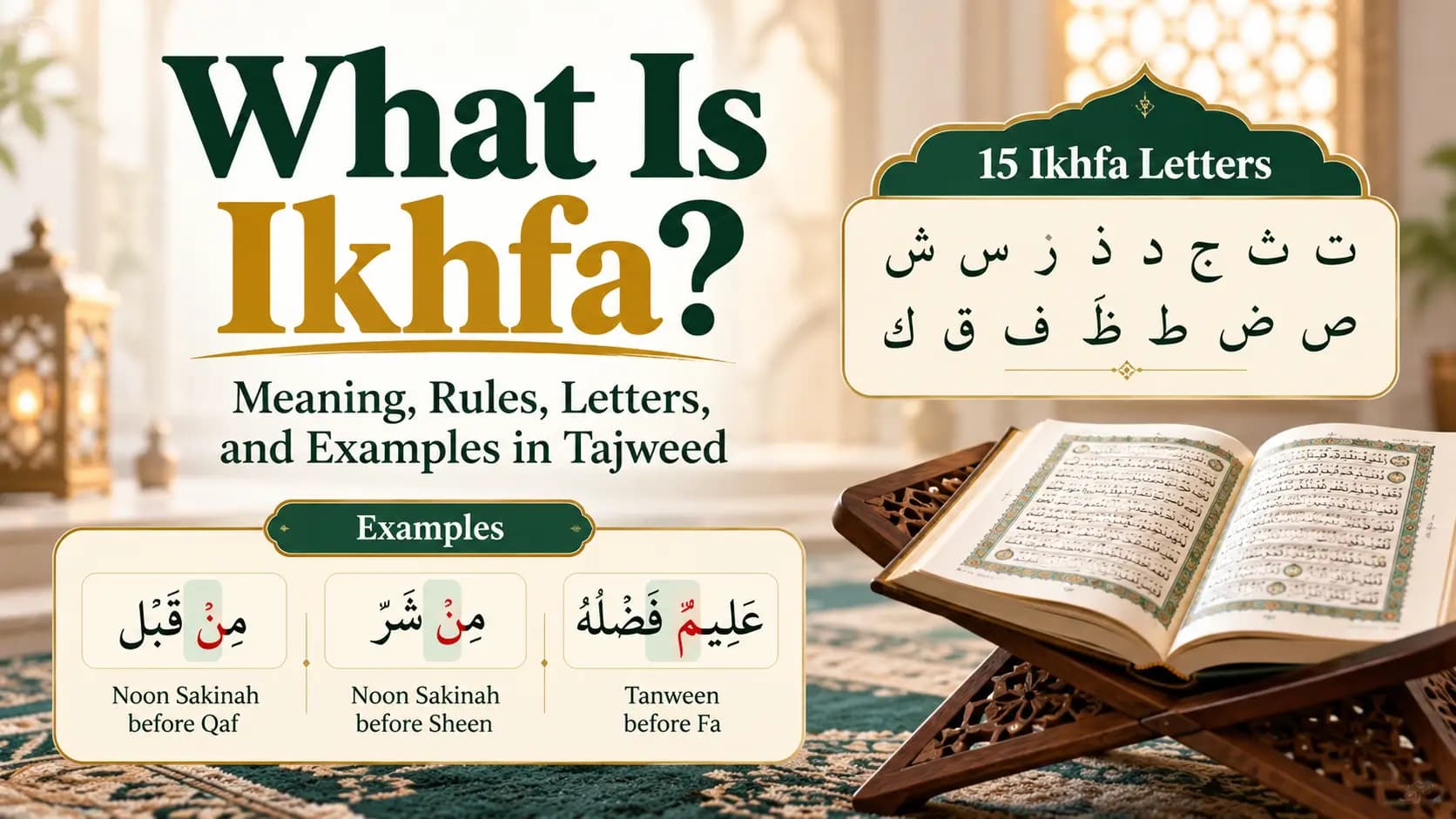
A five-year-old doesn't necessarily need a long explanation of Ikhfa.
They first need to hear the correct sound and reproduce it.
For example, children should gradually learn to distinguish between Arabic letters such as:
- ق and ك
- ص and س
- ح and ه
- ع and ا
- ض and د
- ط and ت
If children develop these distinctions early, correct recitation becomes more natural later.
As their reading ability grows, teachers can introduce formal rules such as:
- Ghunnah
- Qalqalah
- Madd
- Ikhfa
- Idgham
- Iqlab
- Noon Sakinah and Tanween
- Meem Sakinah
- Waqf
Children and adults who already read Quran but want stronger pronunciation and rule application can progress through the academy's Tajweed Course.
Ages 7 to 10: Build Accuracy, Fluency, and Understanding
Around this age, Quran education can become broader.
Children often have enough reading experience to work on more than basic decoding.
Lessons may combine:
- Quran recitation
- Tajweed
- Makharij
- Revision
- Memorization
- Simple translation
- Age-appropriate explanation
- Islamic manners
Meaning becomes especially valuable during these years.
Suppose a child memorizes verses about gratitude. Parents can connect those verses with blessings the child experiences every day.
When children learn verses about honesty, parents can discuss what honesty looks like at school and home.
This helps children recognize that the Quran isn't simply something to pronounce beautifully.
It's guidance to understand and live by.
Students who are ready to go beyond recitation can study Quranic meaning through the Quran Tafseer Course.
What Is the Best Age to Start Quran Memorization?
Learning to read Quran and memorizing the entire Quran aren't identical goals.
A child may begin Quran education at four while starting formal Hifz several years later.
For many children, structured memorization becomes more practical during the early school years. However, readiness should remain the deciding factor.
Before serious Hifz begins, consider whether your child can:
- Repeat verses accurately.
- Maintain previous memorization.
- Accept regular revision.
- Follow teacher correction.
- Concentrate consistently.
- Keep a learning routine.
- Handle new lessons without excessive stress.
Light memorization can begin much earlier.
Short Surahs frequently used in Salah provide a natural starting point.
Children ready for systematic Hifz can progress into the academy's Quran Memorization Course.
Does a Child Need to Read Arabic Before Starting Hifz?
Not necessarily.
Some children memorize by listening before becoming fluent readers. Oral memorization has long played an important role in Quran education.
However, independent reading gives a Hifz student several advantages.
A child who reads can:
- Follow the Mushaf independently.
- Review without constant assistance.
- Notice missing or incorrect words.
- Connect memorized sounds with written text.
- Depend less on recordings.
- Revise more efficiently.
So reading fluency isn't an absolute prerequisite for every child.
Still, it can become a powerful tool for accurate, independent memorization.
Parents considering formal memorization can review the Quran Memorization Course after their child's teacher assesses readiness.
How Long Should Quran Lessons Be?
More time doesn't automatically produce more learning.
Young children usually benefit from shorter, focused sessions.
| Age | Practical Lesson Length |
| Ages 3–5 | Around 5–15 minutes |
| Ages 5–7 | Around 15–25 minutes |
| Ages 7+ | Around 20–35 minutes |
| Hifz students | Based on new lesson and revision needs |
These aren't religious rules or fixed developmental requirements.
Use them as practical starting points.
If your six-year-old concentrates beautifully for twenty minutes and then becomes restless, extending every lesson to forty-five minutes may add little educational value.
Finish while meaningful learning is still happening.
Families comparing current class options can review the academy's Pricing and Fee Plans.
How Many Quran Classes Should a Child Take Each Week?
Consistency usually beats occasional intensity.
Imagine one child studying for twenty minutes four times each week. Another studies for ninety minutes only once a week.
The first child receives repeated exposure to Arabic sounds, words, and reading patterns. The second may spend much of each new session recovering material forgotten during the long gap.
A practical schedule could include:
- Beginners: 2–3 structured lessons weekly
- Developing readers: 3–5 lessons weekly
- Hifz students: Frequent instruction combined with daily revision
The ideal schedule depends on age, family routine, current ability, and learning goals.
Parents who want to compare monthly study options can visit the Pricing and Fee Plans page.
Don't Turn Quran Learning Into a Race
Parents naturally feel proud when their children progress.
Problems begin when progress becomes competition.
Statements such as:
"Your cousin has already finished five Juz. Why haven't you?"
rarely strengthen a child's relationship with Quran learning.
Instead, compare your child with their own earlier performance.
Ask better questions.
Did their pronunciation improve?
Can they read a line with less help?
Did they remember yesterday's lesson?
Can they now distinguish letters they previously confused?
Those are meaningful achievements.
Teach Quran With Discipline Without Creating Fear
Gentleness doesn't mean abandoning standards.
Children still need correction, routine, practice, and expectations.
However, correction shouldn't humiliate them.
A teacher might say:
"Listen carefully to that sound once more. You're close. Now try it again."
The child receives meaningful correction without feeling ashamed.
Avoid mocking mistakes, shouting over ordinary pronunciation errors, or treating every forgotten word as deliberate disobedience.
Quran learning should require effort.
It shouldn't feel threatening.
Common Mistakes Parents Should Avoid
Even well-intentioned parents can accidentally make Quran lessons harder.
Common mistakes include:
- Starting very long lessons too early
- Comparing siblings or cousins
- Rushing through Qaida
- Ignoring Makharij
- Measuring progress only by pages
- Forcing unrealistic memorization targets
- Changing teachers too frequently
- Scheduling lessons when children are exhausted
- Teaching complicated Tajweed terminology before basic pronunciation
- Giving too many subjects simultaneously
- Neglecting revision
One of the biggest mistakes is confusing fast progress with strong progress.
A child who reads ten inaccurate pages hasn't necessarily learned more than one who reads six pages correctly.
Can Starting Quran Lessons Too Early Be Harmful?
Introducing Quran early isn't the problem.
Using an unsuitable teaching method can be.
A three-year-old may happily spend five minutes identifying Arabic letters. The same child might become miserable when forced into a demanding forty-minute lesson.
Watch for persistent patterns such as:
- Crying before nearly every class
- Strong fear of the teacher
- Repeated refusal to open the Qaida
- Extreme tiredness
- Anxiety about mistakes
- Lessons consistently beyond the child's ability
- Loss of interest after previously enjoying Quran activities
Occasional reluctance is normal.
Persistent distress deserves investigation.
Sometimes the solution is surprisingly simple: shorten the lesson, adjust the timing, reduce the workload, or find a teacher whose style better matches the child.
What If Your Child Doesn't Want Quran Lessons?
First, find the reason.
Don't immediately assume laziness.
Your child may struggle because:
- The lesson is too difficult.
- The session lasts too long.
- They're exhausted after school.
- They don't understand the teacher.
- Corrections feel overwhelming.
- Homework exceeds their ability.
- Previous lessons haven't been revised.
- The teaching style doesn't suit them.
Try changing one variable at a time.
For example, moving a class from immediately after school to later in the day may improve concentration dramatically.
A different teacher can also make a major difference.
How to Choose the Right Quran Teacher for Your Child
Correct recitation is essential.
Yet Quran knowledge alone doesn't automatically make someone effective at teaching children.
A strong children's Quran teacher should:
- Recite accurately.
- Understand Tajweed.
- Hear subtle pronunciation errors.
- Correct patiently.
- Adjust the lesson pace.
- Keep younger learners engaged.
- Know when to repeat and when to move forward.
- Communicate useful progress information.
- Build confidence without lowering standards.
Personality fit matters too.
A shy child may need an especially encouraging teacher. An energetic learner may benefit from someone who keeps lessons interactive and well structured.
A useful first step is to let the child experience the teaching style before committing. International Quran Academy provides a 3 Days Free Trial for new students.
Online vs In-Person Quran Classes
Both formats can work well.
Benefits of Online Quran Classes
Online learning can provide:
- Flexible scheduling
- One-on-one attention
- Access to teachers outside your local area
- Male and female teacher options
- Learning from home
- Easier scheduling around school and family commitments
Benefits of In-Person Quran Classes
In-person lessons may provide:
- Face-to-face classroom interaction
- Easier physical supervision for very young children
- Fewer technology-related distractions
- A traditional classroom environment
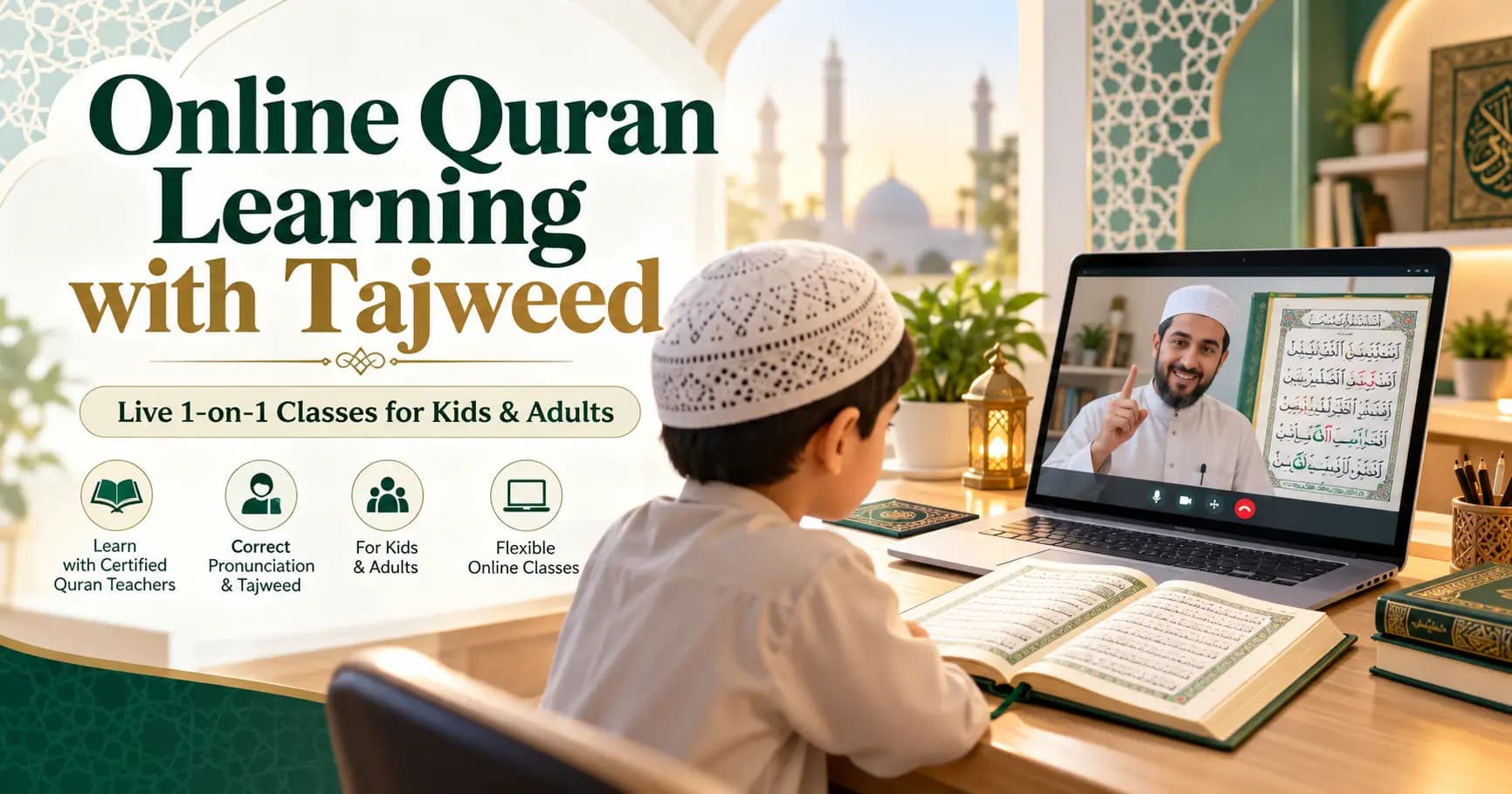
For online lessons, good audio matters enormously because teachers need to hear subtle pronunciation differences.
Parents may also need to remain nearby during the first few lessons with very young children.
Students starting with basic reading can explore the Noorani Qaida Course, while children who already recognize Arabic words may be more suitable for the Nazra Quran Course.
How Parents Can Support Quran Learning at Home
The teacher shouldn't work alone.
Parents don't need to replace the Quran teacher. Their main role is to support consistency.
Try these habits:
- Let your child see you reading Quran.
- Establish a predictable Quran time.
- Review teacher-assigned material.
- Practice briefly between classes.
- Ask the teacher which mistakes need attention.
- Avoid teaching pronunciation that conflicts with the teacher's correction.
- Praise genuine improvement.
- Keep Quran time calm.
Five minutes of useful revision can make the next lesson far more productive.
How to Measure Real Quran Progress
Don't ask only:
"How many pages did you finish?"
Ask:
- Are letters recognized faster?
- Is pronunciation clearer?
- Does the child need less prompting?
- Can they remember the previous lesson?
- Are previously memorized Surahs still strong?
- Can they recognize some of their own mistakes?
- Is their reading becoming smoother?
Those measures reveal much more.
A Practical Example
Suppose two students begin together.
Student A reaches page 40 quickly but continues confusing several Arabic letters.
Student B reaches page 30 but reads accurately and remembers previous corrections.
Student A looks ahead on paper.
Student B may actually have the stronger foundation.
Quran learning rewards accuracy and consistency more than impressive page counts.
Understanding Quran Should Grow With the Child
Correct reading is foundational.
Eventually, however, children should begin understanding what they read.
Young children can start with simple Quranic lessons:
- Allah is Merciful.
- Allah created us.
- We should tell the truth.
- We should respect our parents.
- We should be grateful.
- Muslims should help others.
As children mature, translation and Tafseer can gradually add greater depth.
Older students who already have a reading foundation can explore the Quran Tafseer Course.
Families who want their children to study broader Islamic knowledge alongside Quran learning can also consider the Islamic Studies Course.
What Does Islam Say About Learning Quran at a Young Age?
Islam places tremendous value on learning and teaching the Quran.
The Prophet Muhammad ﷺ said:
"The best among you are those who learn the Quran and teach it."
The guidance encourages Quran education without restricting learning to one specific childhood age.
Children learned Quran during the earliest generations of Islam. At the same time, parents shouldn't turn a particular birthday into a universal religious rule without evidence.
Begin beneficial education when your child is ready.
Then adapt the method as the child grows.
Is Age 7 the Required Age to Start Quran?
No.
Parents sometimes connect Quran education with the well-known Islamic instruction concerning Salah at age seven.
These are separate matters.
A child can begin Quran education well before seven.
By age seven, many children simply have stronger attention, language ability, reading skills, and awareness of routines. That can make structured learning easier.
Don't wait unnecessarily if your younger child is ready.
Likewise, don't panic if your child hasn't started by seven.
Is Age 10 Too Late to Start Learning Quran?
Absolutely not.
Older children may actually bring several advantages to Quran learning.
They can often:
- Understand explanations more quickly.
- Focus for longer periods.
- Complete revision more independently.
- Ask better questions.
- Understand Tajweed terminology.
- Learn meanings alongside recitation.
- Manage a structured learning routine.
The door to Quran learning doesn't close at ten.
It doesn't close at fifteen.
It doesn't close in adulthood either.
A beginner can start with the Noorani Qaida Course, while learners with an existing foundation can move into the Nazra Quran Course, Quran Recitation Course, or Tajweed Course according to their current ability.
Best Age to Start Learning Quran: Final Recommendation
The best age to start learning Quran isn't simply the youngest possible age.
Start the relationship early. Introduce structured instruction when your child is ready.
A useful roadmap is:
- Birth–2: Build familiarity through listening.
- 2–3: Introduce short duas, words, and repetition.
- 3–4: Begin Arabic letters when the child shows readiness.
- 4–6: Start structured Qaida and pronunciation.
- 6–7: Develop Quran reading and basic Tajweed.
- 7–10: Strengthen fluency, Tajweed, understanding, and possible Hifz.
- 10+: Continue with advanced reading, memorization, Tafseer, and deeper study.
Above all, protect three things: accuracy, consistency, and love for the Quran.
A child who progresses slowly with a strong foundation may ultimately go further than a child pushed rapidly through pages.
Choose the Right Quran Learning Path for Your Child
Every child starts from a different point.
A complete beginner may need Arabic letters first. Another child may already read Quran but struggle with Tajweed. A third may be ready for memorization or deeper Quranic understanding.
International Quran Academy currently provides these relevant learning paths:
- Noorani Qaida Course — for beginners developing Arabic reading foundations.
- Nazra Quran Course — for students working toward accurate and fluent Quran reading.
- Quran Recitation Course — for developing recitation quality.
- Tajweed Course — for pronunciation, Makharij, and Tajweed rules.
- Quran Memorization Course — for structured Hifz.
- Quran Tafseer Course — for students ready to understand Quranic meanings more deeply.
- Islamic Studies Course — for broader Islamic education.
- Pricing and Fee Plans — for current study-plan options.
- 3 Days Free Trial — for families who want to experience a class before starting regular lessons.
Choosing the right level matters more than choosing the most advanced course.
Start where your child is today. Then build from there.
Frequently Asked Questions About the Best Age to Learn Quran
Can a 3-year-old start learning Quran?
Yes. A three-year-old can begin with Quran listening, Arabic letters, simple repetition, and short Surahs. Keep structured sessions brief and follow the child's readiness.
Is 4 years old too early for Quran classes?
Not necessarily. Many four-year-olds can participate in beginner lessons when they can follow simple instructions, repeat sounds, and remain engaged for several minutes.
Is age 5 good for Noorani Qaida?
Yes. Five can be an excellent age for structured Qaida learning. Some children begin earlier while others become ready later. The Noorani Qaida Course is designed for beginners and children learning the foundations of Quran reading.
What should a 5-year-old learn in Quran class?
A five-year-old may work on Arabic letters, vowel signs, joined letters, Makharij, beginner Qaida reading, short Surahs, and simple duas. The exact workload should match the child's ability.
Should a child start Quran at age 7?
A child doesn't need to wait until seven. Quran learning can begin earlier whenever the child is ready for age-appropriate instruction.
At what age should children start Tajweed?
Correct pronunciation should develop from the first Quran lessons. Formal Tajweed terminology can be introduced gradually as reading ability improves. Students who need focused Tajweed instruction can study through the Tajweed Course.
What age is suitable for Hifz?
Many children become ready for structured Hifz during the early school years. However, reading ability, attention, revision habits, motivation, and emotional readiness matter more than a fixed birthday. The Quran Memorization Course is the relevant next step when a learner is ready for structured Hifz.
Should children complete Qaida before reading Quran?
Children should develop the necessary foundational skills before moving fully into Quran reading. Teachers should judge readiness by actual reading ability rather than simply whether the final Qaida page has been completed.
Can children memorize Quran before they can read Arabic?
Yes. Children can memorize through listening and repetition. However, Arabic reading skills make independent revision and long-term Hifz easier.
Can children learn Quran if Arabic isn't their first language?
Yes. Children don't need to speak conversational Arabic before learning Quran. A qualified teacher can teach letters, sounds, Makharij, and Quran reading systematically.
How many Quran classes should children take each week?
Many beginners do well with two to five structured classes each week depending on their age, attention span, and goals. Families can review current options on the Pricing and Fee Plans page.
Are online Quran classes suitable for young children?
Yes. Short, interactive, one-on-one lessons can work well for young learners. A parent may need to remain nearby during early sessions until the child becomes comfortable learning independently.
How do I know which Quran course my child needs?
A complete beginner usually starts with the Noorani Qaida Course. A child who already recognizes Arabic letters and basic words may be ready for the Nazra Quran Course. Students who can read but need stronger pronunciation may benefit from the Tajweed Course. More advanced learners may progress to Quran Memorization or Quran Tafseer.
Can we try a class before enrolling?
Yes. New students can use the academy's 3 Days Free Trial to experience the teaching approach before starting regular classes.