
Comprehensive Learning

Islamic Studies Course

The Islamic Studies Course is a simple way to learn about Islam. It covers important topics like the Quran, Hadith (the sayings of the Prophet), Islamic law (Fiqh), and the rich history of Islam.

Islamic Studies Course Banner
🎓
Certified CourseAccredited Tutors

Course Overview

Detailed Journey

Course Structure & Levels

🌱

Foundation Level

The Foundation Level of the Islamic Studies Course is designed to provide a strong start for learners. This level introduces key concepts and foundational knowledge that will help students understand Islam and its teachings in a simple, clear way.

Introduction to Quranic Studies

This section focuses on helping students get familiar with the Quran. It covers the importance of the Quran in Islam and how it serves as the central religious text for Muslims. Students will begin their journey by learning about the structure and themes of the Quran.

Overview of the Quran's structure and history: In this part, students will explore how the Quran is organized, including its chapters (Surahs) and verses (Ayahs). They will also learn about the history of how the Quran was revealed and preserved, giving them a better understanding of its significance in Islam.

Basic Tajweed rules for proper recitation: Here, students will be introduced to the basics of Tajweed, which are the rules for properly pronouncing Arabic letters when reciting the Quran. This ensures that students can recite the Quran correctly, as it was intended to be recited.

Introduction to major themes in the Quran: In this section, students will explore some of the major themes of the Quran, such as guidance for living a moral life, stories of past prophets, and teachings on faith, patience, and gratitude. These themes will help students understand the core messages of the Quran and how they apply to daily life.

Fundamentals of Islam

The Islamic Studies Course introduces the core beliefs and practices that form the foundation of a Muslim's life. Understanding these fundamentals is key to living according to Islamic principles.

Five Pillars of Islam: The Five Pillars of Islam are the basic acts of worship that every Muslim must follow. These include the declaration of faith (Shahada), prayer (Salah), fasting during Ramadan (Sawm), giving to charity (Zakat), and pilgrimage to Mecca (Hajj). Each pillar plays a vital role in shaping a Muslim's relationship with God and their community.

Six articles of faith: The Six Articles of Faith outline what every Muslim believes. These include belief in Allah (God), His angels, His books, His prophets, the Day of Judgment, and divine destiny (Qadr). These beliefs are central to a Muslim's understanding of their faith and the world.

Life of Prophet Muhammad (PBUH): The life of Prophet Muhammad (PBUH), the last and final messenger in Islam. This section covers the significant events of his life, from his early years in Mecca to his role in spreading the message of Islam. Students will explore his character, including his honesty, kindness, and perseverance. The life of Prophet Muhammad (PBUH) is rich with lessons in personal conduct, leadership, and devotion to God. His example provides a model for ethical behavior and moral integrity. Understanding His life helps Muslims connect more deeply with their faith. His experiences offer practical guidance on living a righteous life.

Arabic for Beginners

This course section is designed to introduce students to the Arabic language, focusing on the basics that are essential for understanding and engaging with Islamic texts.

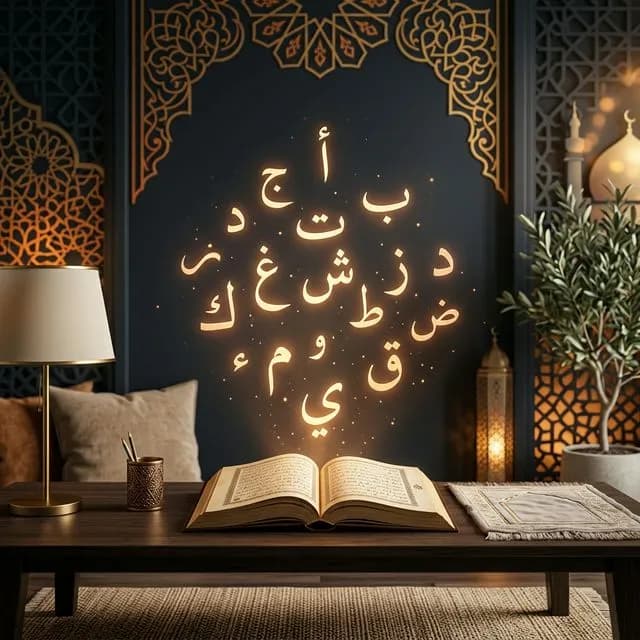
Arabic alphabet and pronunciation: Students will start by learning the Arabic alphabet, which consists of 28 letters. They will practice pronunciation and get familiar with how each letter sounds in different positions within words. This foundational knowledge is crucial for reading and reciting the Quran accurately.

Basic vocabulary related to Islamic terms: This part covers essential Islamic terms and phrases that students will encounter frequently. They will learn basic vocabulary related to Islamic practices, prayers, and key concepts.

Simple Quranic verses and their meanings: The students will study simple verses from the Quran, focusing on their meanings and interpretations. By learning these verses, students will gain insights into the teachings of Islam and improve their ability to connect with the Quran on a personal level.

🌿

Intermediate Level

The Intermediate Level of the Islamic Studies Course builds on the foundational knowledge, diving deeper into the study and interpretation of the Quran.

Quranic Exegesis (Tafsir)

In this Islamic Studies Course section, students will explore Quranic exegesis, or Tafsir, which involves the interpretation and explanation of Quranic verses. Students will learn about the methods and principles used by scholars to understand the meanings and contexts of the Quran.

Principles of Tafsir: Students will study the fundamental principles of Tafsir, including the historical, linguistic, and theological approaches to interpreting the Quran.

Study of selected surahs and their interpretations: This part involves a detailed examination of selected Surahs (chapters) from the Quran. Students will explore their themes, messages, and the context of their revelation. This study helps in grasping the deeper meanings and implications of these Surahs in daily life.

Contextual understanding of Quranic verses: Students will learn how to interpret Quranic verses within their historical and social contexts. This approach ensures a more comprehensive understanding of the verses, considering the circumstances of their revelation and their relevance to contemporary issues.

Hadith Studies

The Hadith Studies section offers a deep dive into the sayings, actions, and approvals of Prophet Muhammad (PBUH). These Hadiths are crucial for understanding the practical aspects of Islamic teachings, as they provide detailed examples of how the Prophet (PBUH) implemented and lived out the principles of Islam.

This section aims to highlight how the Hadiths complement the Quran, offering further clarification and context for its teachings.

Introduction to major Hadith collections: Students will be introduced to the major collections of Hadith, including Sahih Bukhari, Sahih Muslim, Sunan Abu Dawood, and others.

Authentication of Hadiths (Isnad and Matn): This part covers the methods used to authenticate Hadiths, focusing on the concepts of Isnad (the chain of narrators) and Matn (the text of the Hadith).

Practical application of Hadiths in daily life: Students will explore how Hadiths can be applied in everyday situations, providing practical guidance on behavior, ethics, and decision-making.

Islamic Jurisprudence (Fiqh)

Islamic Jurisprudence, or Fiqh, refers to the understanding and interpretation of Islamic law based on the Quran, Hadith (sayings of the Prophet), and other traditional sources. It covers both acts of worship and everyday dealings, guiding Muslims on how to live according to Islamic principles.

Sources of Islamic law: The primary sources include: Quran, Hadith, Ijma' (Consensus), and Qiyas (Analogy).

Fiqh of worship (Ibadat): The Fiqh of worship covers the rules for acts of worship, including: Prayer (Salah), Fasting (Sawm), Charity (Zakat), and Pilgrimage (Hajj).

Contemporary Fiqh issues: In modern times, Fiqh has expanded to address new issues faced by Muslims, including: Islamic finance, Bioethics, Environmental concerns, and Digital technology.

🌳

Advanced Level

The Advanced Level explores the Quran in more depth. It compares Quranic stories with those in other scriptures, highlights the beauty of the Quran's language, and looks at scientific facts mentioned in the Quran.

Comparative Quranic Studies

Comparative Islamic Studies Course examines the Quran about other religious texts, particularly the Bible. It highlights similarities and differences in the narratives, linguistic style, and the Quran's broader impact.

Quranic narratives and their biblical counterparts: This section compares stories found in both the Quran and the Bible. Many figures, such as Prophet Moses, Prophet Joseph, and Prophet Jesus, appear in both scriptures. While there are similarities in the overarching stories, the Quran presents these narratives with unique perspectives, teachings, and lessons.

Linguistic Miracles of the Quran: The linguistic style of the Quran is considered a miracle due to its unmatched eloquence, complexity, and precision. Despite its poetic nature, the Quran is neither prose nor poetry, yet it surpasses both in beauty and expression.

Scientific miracles in the Quran: The Quran contains verses that reference natural phenomena, which align with modern scientific discoveries. These include descriptions of the development of the human embryo, the expanding universe, and the water cycle. Which is considered miraculous and ahead of its time.

Islamic History and Civilization

Islamic history and civilization cover the rich and diverse heritage of the Muslim world, from its early beginnings to its impact on modern society.

Early Islamic history and expansion: This section focuses on the early days of Islam, from the life of the Prophet Muhammad (peace be upon him) to the rapid expansion of the Islamic empire. It covers key events, including the Hijra, the establishment of the first Muslim community, and the spread of Islam across the Middle East.

Contributions of Muslims to science and arts: Highlights the significant achievements of Muslims in various fields during the Islamic Golden Age, including Mathematics, Astronomy, Medicine, Arts, and Architecture.

Islam in the modern world: This topic examines the role of Islam in today's world, addressing the challenges and contributions of Muslims in the globalized world, the impact of modern technology, and Islam's role in promoting peace and tolerance.

Islamic Ethics and Spirituality

Islamic ethics and spirituality focus on the moral teachings and spiritual practices within Islam, guiding Muslims toward leading a life of righteousness, inner peace, and connection with God.

Quranic teachings on morality and ethics: The Quran lays out a comprehensive guide for moral and ethical behavior, emphasizing values such as honesty, kindness, and justice. The Quran also warns against sinful acts like lying, stealing, and harming others.

Introduction to Islamic mysticism (Tasawwuf): Islamic mysticism, known as Tasawwuf, focuses on the inner, spiritual dimension of Islam. It seeks to purify the heart and soul. Tasawwuf teaches humility, selflessness, and the importance of detaching from worldly desires.

Spiritual development through Quranic teachings: The Quran offers profound guidance for spiritual growth. Practices such as prayer (Salah), fasting (Sawm), and reflection on the Quran are central to nurturing the soul.

⭐

Specialization Tracks

The Specialization Tracks are designed to deepen your expertise in specific areas of Quranic studies, helping you achieve mastery in various aspects of Quranic Arabic and its interpretation.

Quranic Arabic Mastery

The Quranic Arabic Mastery track is tailored for individuals who aim to gain a profound grasp of the language used in the Quran.

Advanced Arabic grammar and morphology: Syntax (Nahw) rules governing sentence structure. Morphology (Sarf) involving word formation, roots, and derivations.

Quranic vocabulary and linguistics: Key Quranic Terms and Their Meanings, Linguistic Nuances, and Contextual Understanding.

Translation and interpretation techniques: Translation Methods and Interpretation Techniques (Tafsir).

Islamic Leadership and Dawah

This section focuses on building skills for those who wish to lead and guide their communities by Islamic principles.

Public speaking and khutbah preparation: Students will learn the art of public speaking, especially in the context of delivering a khutbah (Friday sermon).

Community engagement and management: This part emphasizes the importance of engaging with and managing a community positively and inclusively.

Interfaith dialogue and Dawah methods: Here, students will be introduced to effective methods for Dawah, including engaging in respectful and productive interfaith dialogues.

Islamic Finance and Economics

This section covers the fundamentals of Islamic finance and economics, focusing on how these systems operate per Islamic principles.

Principles of Islamic Economics: Students will explore the core principles of Islamic economics, including the concepts of fairness, justice, and the prohibition of interest (riba).

Islamic banking and finance: This section delves into the structure and functions of Islamic banking and finance, which operate without interest and are based on profit-sharing models.

Zakat management and Islamic charity: In this part, students will learn about Zakat, one of the Five Pillars of Islam, and its role in supporting social welfare.

🎓

Capstone & Assessment

The final steps and continual evaluation to solidify your knowledge in the Islamic Studies Course.

Capstone Project

The Capstone Project is the final step of the Islamic Studies Course, where students apply their knowledge through independent research.

Students choose a topic related to Quranic studies or any area of Islamic sciences that interests them.

Conduct in-depth research and analysis by gathering information from various sources, including Islamic texts, scholarly articles, and historical records. This project emphasizes critical thinking.

Present findings either through a scholarly paper or a multimedia presentation, demonstrating their research and insights. This contributes to their academic and personal growth.

Continuous Assessment

The Continuous Assessment process ensures that students stay engaged and apply their learning throughout the Islamic Studies Course.

Regular quizzes will be conducted to test students' knowledge of Quranic verses and Hadiths. These quizzes help reinforce learning.

Practical assignments such as leading prayers or giving short lectures allow students to practice what they have learned. These hands-on tasks help build confidence.

Online discussion forums and peer-to-peer learning activities encourage students to interact with each other, share ideas, and engage in collaborative learning. This fosters a supportive learning environment.

Begin Your Comprehensive Journey

By the end of the Islamic Studies Course, you'll have a strong foundation in Islamic knowledge and a better connection to your faith. Enroll today to take the next crucial step.

  • ✓
    For personal growth & leadership
  • ✓
    Guided by experienced instructors

Enroll Now

This course will equip you to make a lasting impact with profound knowledge.

Start Free Trial Now