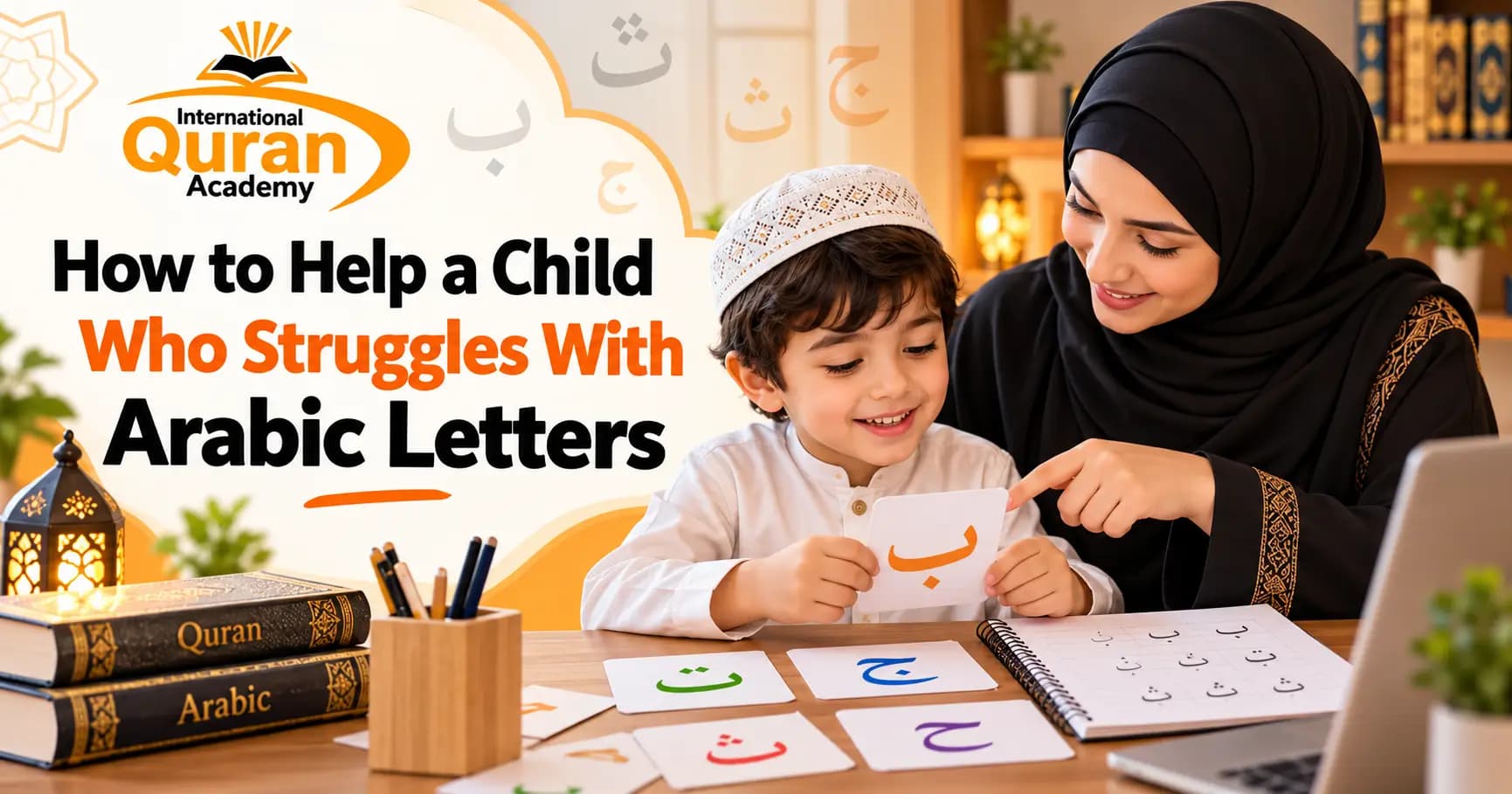

Teaching the Quran to a child is about more than finishing pages, memorizing Surahs, or completing a Qaida. The deeper goal is to help children develop a positive and lasting relationship with the Book of Allah.
However, children learn differently from adults.
Long explanations, repetitive lessons, unrealistic expectations, or constant correction can quickly make a young learner lose interest. On the other hand, short activities, encouragement, stories, interactive practice, and a patient teacher can make Quran learning something a child genuinely looks forward to.
So, how can you make Quran learning fun for kids?
The key is to combine correct Quran education with a teaching approach that matches the child's age, attention span, personality, and current learning level.
Quick Answer: Keep Quran lessons manageable, turn revision into games, use stories and visual activities, celebrate small achievements, encourage listening and repetition, connect Quran lessons with daily life, and choose a teacher who understands how children learn.
Parents who are beginning this journey can also explore our guide on the best age to start learning Quran.
Why Should Quran Learning Be Enjoyable for Children?
Children naturally learn through repetition, imitation, curiosity, interaction, and play.
Making lessons enjoyable does not reduce the respect or importance of Quran education. Instead, it means presenting Quran learning in an age-appropriate way that keeps children attentive and motivated.
A child who enjoys the learning process is more likely to participate, practice between lessons, respond positively to correction, and continue learning consistently.
Parents should therefore focus not only on how many pages a child completes but also on whether the child is becoming more confident, improving pronunciation, remembering previous lessons, and developing an interest in Quran learning.
Families looking for structured Quran education for children can learn more about our online Quran classes for kids.
1. Keep Quran Lessons Short, Clear, and Achievable
Young children do not need to complete a large amount of material in every lesson.
Give your child one or two clear goals.
For example, one lesson may focus on recognizing a few Arabic letters. Another might involve reading two lines correctly. A Hifz student may memorize a small portion while revising previously learned verses.
Small goals allow children to experience success regularly.
Instead of saying:
“You need to finish this whole page.”
Try:
“Let's read these two lines correctly first.”
Once the child succeeds, recognize the improvement.
Children starting from the Arabic alphabet can gradually develop their foundation through the Noorani Qaida Course.
Parent Tip: Completing a smaller amount correctly is usually better than rushing through a larger amount with repeated mistakes.
2. Turn Quran Revision Into a Game
Revision is essential, but it does not always have to feel like formal study.
Children can review what they have learned through simple Quran activities and games.
For example, show several Arabic letters and ask your child to find a particular one.
You can also intentionally pronounce a familiar letter incorrectly and ask:
“Did I read that correctly?”
Children often enjoy correcting adults.
For Surah revision, recite the beginning of a familiar verse and allow your child to continue.
You can also create simple matching activities using Arabic-letter cards, Qaida words, Tajweed symbols, or short Duas.
Children who are still developing their Arabic-reading foundation can benefit from structured lessons through our Noorani Qaida Course.
3. Use Quran Stories to Build Curiosity
Children love stories.
Stories of the Prophets and events mentioned in the Quran can therefore help children develop curiosity and emotional connection with Islamic learning.
Parents can introduce age-appropriate stories about:
- Prophet Adam (AS)
- Prophet Nuh (AS)
- Prophet Ibrahim (AS)
- Prophet Yusuf (AS)
- Prophet Musa (AS)
- Prophet Yunus (AS)
- Prophet Sulayman (AS)
After the story, ask simple questions.
“What did you learn?”
“What good quality did the Prophet show?”
“How could we practice that lesson at home?”
This helps children understand that the Quran contains guidance for everyday life.
Parents who want their children to learn Islamic manners, beliefs, worship, Seerah, and related subjects can also explore the Islamic Studies Course.
4. Use Listening and Repetition
Children learn a great deal through imitation.
Allow your child to listen to clear Quran recitation, especially the Surahs or verses currently being studied.
Then make the listening interactive.
Play a short section, pause it, and ask your child to repeat.
If your child is memorizing a Surah, encourage them to follow along while listening.
Students who can already read Quran but need help with pronunciation, Makharij, and recitation rules can benefit from the Tajweed Course.
Listening is useful, but recordings should support rather than replace a qualified teacher who can identify and correct individual mistakes.
5. Celebrate Small Quran Achievements
Children should not have to complete an entire Juz before receiving encouragement.
Progress happens through many smaller achievements.
Your child may:
- pronounce a difficult Arabic letter correctly;
- remember yesterday's Qaida lesson;
- recite a short Surah confidently;
- apply a Tajweed rule correctly; or
- read a Quranic line more fluently than before.
Recognize these moments.
Instead of simply saying “good,” give specific praise.
For example:
“MashaAllah, your pronunciation was much clearer today.”
“You remembered that rule without help.”
“You read the complete line by yourself.”
Parents can also use stars, stickers, progress charts, or simple family rewards to celebrate meaningful milestones.
6. Let Your Child Become the Teacher
One useful revision technique is to reverse the roles.
After class, ask:
“Can you teach me what your teacher taught you today?”
Allow your child to explain an Arabic letter, Tajweed rule, Surah, Dua, or Qaida lesson.
Listen carefully and ask questions.
You can even deliberately make a small mistake and let the child correct you.
Teaching someone else requires children to actively recall what they have learned.
It also helps parents identify which parts of the lesson the child understands confidently.
7. Use Technology to Make Quran Lessons Interactive
Technology can make Quran learning engaging when used with a clear educational purpose.
During online classes, teachers can:
- display Arabic letters;
- underline Quranic words;
- use a digital pen;
- demonstrate pronunciation;
- ask children to identify letters;
- share visual learning material;
- conduct short quizzes; and
- review previous lessons interactively.
Parents can also use appropriate Quran-learning apps, digital flashcards, audio recitation, and visual Arabic exercises between classes.
However, technology should remain a tool for learning rather than becoming a distraction.
Live online Quran classes for kids can combine technology with direct teacher interaction and personalized correction.
8. Connect Quran Learning With Everyday Muslim Life
One of the best ways to make Quran education meaningful is to connect lessons with everyday life.
If your child is learning Surah Al-Fatihah, remind them that they recite it in every Rak'ah of Salah.
If they learn Bismillah, encourage them to say it before eating.
If they learn Alhamdulillah, explain when Muslims use this phrase.
When children study kindness, honesty, patience, or gratitude, discuss how these qualities can be practiced at home and school.
Children can also strengthen their understanding of Salah through our Namaz Course.
9. Do Not Compare Your Child With Other Children
Every child progresses differently.
One child may memorize quickly but need extra help with pronunciation.
Another may read slowly but very accurately.
One sibling may complete Qaida before another.
This does not mean one child is more successful.
Repeated comparisons can make Quran learning feel stressful.
Instead of saying:
“Your cousin has already started reading Quran.”
Try:
“You are reading much better than you were last month.”
Compare the child with their own previous progress.
Children who have completed their Qaida foundation and are ready to improve Quran-reading fluency can continue with the Quran Nazra Course.
10. Choose a Quran Teacher Who Understands Children
Knowledge of Quran and Tajweed is essential, but teaching children requires additional qualities.
A good Quran teacher for kids should know when to:
- repeat something;
- simplify an explanation;
- encourage the student;
- correct a mistake;
- change the activity; or
- spend more time on revision.
Children should not become afraid of making mistakes.
A good teacher corrects mistakes patiently while helping the child become more confident.
Parents can learn about our teaching team through the Quran Teachers page.
A Simple Quran Learning Path for Kids
Every child should begin according to their current learning level.
| Child's Level | Recommended Course |
| Does not recognize Arabic letters | Noorani Qaida Course |
| Struggles to join Arabic letters | Noorani Qaida Course |
| Can read words but needs Quran fluency | Quran Nazra Course |
| Reads Quran but makes pronunciation mistakes | Tajweed Course |
| Wants to memorize the Quran | Quran Memorization Course |
| Needs Islamic knowledge alongside Quran | Islamic Studies Course |
| Needs help learning Salah | Namaz Course |
The right starting point depends more on the child's current ability than simply their age.
How to Make Hifz Fun for Kids
Quran memorization requires repetition, so Hifz can become tiring when every revision session feels identical.
Try changing the way revision happens.
Let the child recite to a parent.
Listen to the Surah together.
Begin a verse and ask the child to continue.
Alternate between new memorization and familiar portions.
Most importantly, do not focus only on how many new verses were memorized.
Strong Hifz also requires consistent revision of previously memorized portions.
Children who are ready for systematic memorization can explore the Quran Memorization Course.
How Parents Can Make Quran Learning Fun at Home
Parents do not need to become professional Quran teachers to play an important role in their child's learning.
Your main responsibility is to create a positive learning environment.
Make Quran time predictable.
Keep the learning area calm.
Ask your child what they learned.
Listen when they want to demonstrate something.
Praise genuine improvement.
Practice briefly between classes.
Most importantly, let your children see that the Quran is important in your own life.
What If My Child Does Not Want to Learn Quran?
Do not immediately assume that the child dislikes learning Quran.
Try to identify the reason.
The lesson may be too difficult.
The timing may not suit the child.
The child may be tired after school.
The teaching style may not match their learning needs.
The session may be too long.
The child may also be afraid of making mistakes.
Changing one factor at a time can often improve the child's response significantly.
Parents who want to try a teacher before committing to regular classes can begin with the academy's free trial classes.
Making Online Quran Classes Fun for Kids
Online Quran classes should involve active participation.
A good teacher can:
- listen to the child's recitation;
- correct pronunciation;
- ask questions;
- repeat difficult letters;
- display learning materials;
- revise previous lessons;
- use interactive activities; and
- adjust the lesson according to the child's ability.
Personalized Quran learning can be especially useful because each child can progress according to their own level.
Beginners can spend more time learning Arabic letters.
Developing readers can focus on fluency.
Students with pronunciation difficulties can practice Tajweed.
Hifz students can focus more heavily on memorization and revision.
Parents can explore the complete Online Quran Classes for Kids program for more information.
Frequently Asked Questions
How can I make my child interested in learning Quran?
Keep lessons manageable and create positive experiences around Quran learning. Use stories, games, listening exercises, interactive revision, encouragement, and achievable goals.
What are some fun Quran activities for kids?
Arabic-letter matching, letter hunts, Surah continuation games, listening and repeating, Islamic quizzes, story discussions, digital activities, and allowing children to teach their parents what they learned are useful options.
At what age should children start learning Quran?
There is no single perfect age for every child. Readiness, speech development, attention span, interest, and learning goals all matter. Read our detailed guide about the best age to start learning Quran.
Should children start with Noorani Qaida?
Children who cannot yet confidently recognize and join Arabic letters usually benefit from a structured foundation. Learn more about our Noorani Qaida Course.
How can my child improve Quran pronunciation?
Encourage listening and repetition, practice difficult Arabic letters regularly, and ensure that a qualified teacher listens to the child's recitation. Students can develop these skills further through the Tajweed Course.
Can children learn Quran online effectively?
Yes. Live online classes allow teachers to listen, correct mistakes, demonstrate pronunciation, and adapt lessons according to each child's ability. Learn more about our Online Quran Classes for Kids.
How can I encourage my child to memorize Quran?
Set realistic targets, revise consistently, recognize accurate memorization, listen together, and avoid focusing only on the quantity of new verses. Explore the Quran Memorization Course for structured Hifz learning.
Help Your Child Build a Lifelong Connection With the Quran
Making Quran learning fun does not mean turning Quran education into entertainment.
It means teaching children in a way that respects how they learn.
Use encouragement instead of constant criticism.
Choose manageable goals instead of rushing.
Combine Quran reading with listening, stories, revision, meaningful discussions, and everyday Islamic practice.
At International Quran Academy, children can learn Noorani Qaida, Quran reading, Tajweed, Hifz-ul-Quran, Islamic Studies, Salah, and other essential Islamic subjects with qualified male and female Quran teachers.
Start With a 3-Day Free Trial
Parents can experience our teaching approach before beginning regular classes.
Start your child's Quran-learning journey through the 3-Day Free Trial.