
For Muslims who want to move beyond basic Quran reading and reach an advanced level of recitation or memorization, understanding Ijazah is important. What is a Quran Ijazah? How is it different from a normal course certificate? What is a Sanad? Do you need Tajweed first? Can you receive an Ijazah online?
This guide answers these questions in one place. If you already have strong Quran reading or memorization skills and want structured advanced study, explore our Ijazah Quran Course.
What Is an Ijazah in Quran?
An Ijazah is an authorization granted by a qualified teacher to a student after the teacher has personally assessed the student’s recitation, memorization, or another defined field of Quranic study.
The Arabic word “Ijazah” broadly means permission or authorization. In Quranic learning, it traditionally indicates that a student has completed a recognized path of study with a teacher and demonstrated the required level of accuracy.
For a recitation Ijazah, this usually means reciting the Quran accurately with correct Tajweed and pronunciation. For a Hifz Ijazah, the student is generally expected to have memorized the Quran and recite it accurately from memory according to the teacher’s requirements.
The scope should always be clear. An Ijazah in one recitation does not automatically mean authorization in every Qira’ah or every field of Quranic study.
What Is Sanad in Quran?
Sanad means a chain of transmission. In Quranic recitation, it refers to the chain of teachers through whom a particular recitation has been learned and transmitted.
A student learns from a teacher, that teacher learned from another teacher, and the chain continues through earlier generations of Quran teachers. This is one reason Ijazah study emphasizes direct teacher-to-student correction.
A qualified teacher listens carefully, corrects errors in Makharij, Tajweed, fluency, stopping and starting, and confirms whether the required standard has been reached.
If you need to strengthen these foundations before advanced study, our Quran Recitation Course can help improve your recitation.
Ijazah vs Quran Course Certificate
A Quran course certificate and an Ijazah are not necessarily the same.
A course certificate normally confirms that a student completed a program, level, or curriculum. Someone may receive a certificate after completing Tajweed, Quran reading, or memorization lessons.
An Ijazah is more specific. It traditionally represents authorization from a qualified teacher showing that the student has met the required standard in a defined subject, such as Quran recitation or memorization.
Therefore, finishing a Quran course does not automatically mean receiving an Ijazah. Before enrolling, ask whether the final document is a completion certificate, an Ijazah, or both, and what the Ijazah specifically covers.
What Is Hafs ‘an ‘Asim?
Hafs ‘an ‘Asim is one of the most widely used transmitted readings of the Quran today.
The name refers to Hafs ibn Sulayman transmitting the recitation of his teacher ‘Asim ibn Abi al-Najud. When students study Quran recitation according to Hafs ‘an ‘Asim, they are following this recognized transmitted reading.
An Ijazah in Hafs ‘an ‘Asim focuses on reciting according to the rules associated with that riwayah. The teacher may assess Tajweed, pronunciation, fluency, stops and starts, and consistency.
Students who still need to improve these skills should consider formal Tajweed training before starting advanced Ijazah study.
What Is Warsh Recitation?
Warsh is another well-known riwayah of Quran recitation. It refers to Warsh ‘an Nafi’, meaning the recitation transmitted by Warsh from Imam Nafi’.
Hafs and Warsh are not different Qurans. They are recognized transmitted recitations with differences in certain pronunciation details, vowel lengths, hamzah treatment, word forms, and other recitational rules.
A student fluent in Hafs should not assume that this automatically qualifies them to recite or teach Warsh. Each riwayah has its own details and should be learned from a teacher qualified in that transmission.
Different Types of Quran Ijazah
The two types most students encounter are Recitation Ijazah and Hifz Ijazah.
Quran Recitation Ijazah
A Quran Recitation Ijazah is for students who want authorization in reciting the Quran accurately according to a particular recognized transmission. The student recites to the teacher, receives detailed corrections, and continues until the required standard is reached.
This path is suitable for students who have strong reading skills and advanced Tajweed, even if they have not memorized the entire Quran.
Hifz Ijazah
A Hifz Ijazah is intended for students who have memorized the Quran and want their memorization and recitation evaluated at an advanced level.
The student generally needs strong retention, accurate recitation, correct Tajweed, and consistency throughout the Quran. If you are still completing your memorization, begin by strengthening it through a structured Quran Memorization Course.
There are also Ijazat connected with particular Qira’at or Riwayat. Students should verify exactly what their teacher is qualified to transmit and what the final Ijazah covers.
What Are the Requirements for Quran Ijazah?
Requirements can vary according to the type of Ijazah and the teacher granting it, but students generally need a strong foundation.
For a recitation Ijazah, you should normally be able to read the Quran fluently, apply Tajweed rules, pronounce Arabic letters from their proper articulation points, and avoid repeated major recitation errors.
For a Hifz Ijazah, complete Quran memorization is normally expected together with strong retention and accurate recitation.
A good teacher may assess you before starting and tell you whether you are ready for Ijazah-level study or need preparation first. This prevents an advanced program from becoming basic correction work.
Do You Need Tajweed Before Ijazah?
In most cases, a solid Tajweed foundation is essential before successfully completing a Quran recitation Ijazah.
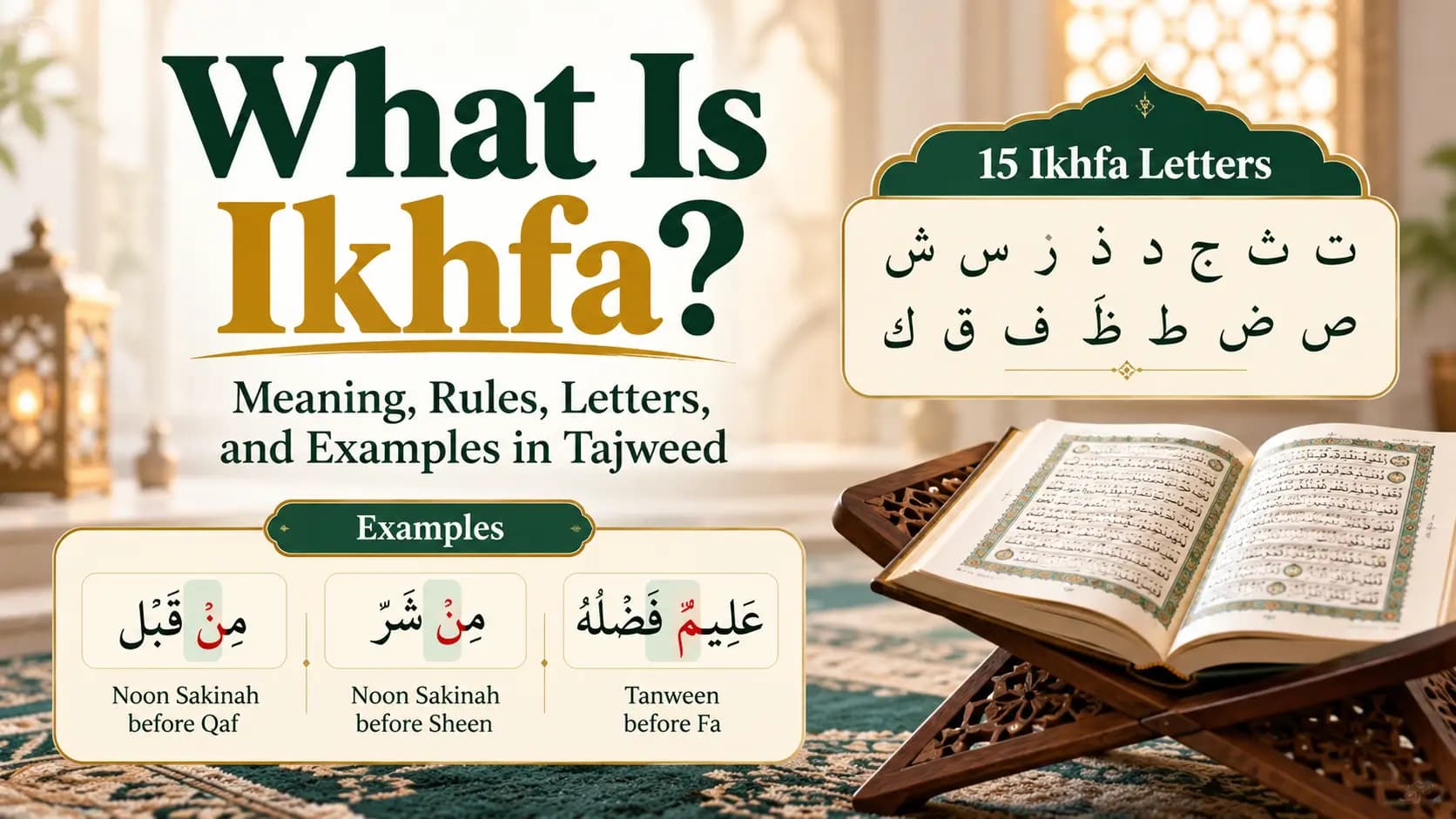
Ijazah study is generally not a replacement for beginner Tajweed lessons. It refines and verifies recitation at a higher level. Students should be familiar with Makharij, characteristics of letters, Noon Sakinah and Tanween, Meem Sakinah, Madd, Qalqalah, Ghunnah, and correct stopping and starting.
Your Tajweed does not have to be flawless before you begin, because an Ijazah teacher will continue correcting you. However, if basic mistakes are frequent, completing an Online Tajweed Course first is usually more effective.
How Long Does Quran Ijazah Take?
There is no universal duration for a Quran Ijazah.
The time depends on your starting level, the type of Ijazah, lesson frequency, how much Quran is covered in each session, how many corrections you need, and how consistently you revise.
A strong reciter may progress faster than someone with repeated Tajweed or pronunciation problems. Similarly, a Hafiz with excellent retention may move more quickly than someone who needs extensive revision.
Instead of choosing a program only because it promises a fast completion time, focus on the quality of correction and whether you genuinely meet the required standard. Ijazah should represent demonstrated competence, not simply time spent in lessons.
Can You Get Quran Ijazah Online?
Yes. Quran Ijazah study can be conducted online when there is direct live learning between the student and a qualified teacher who can listen, correct recitation, track progress, and assess the student properly.
Online classes allow students to study with teachers outside their city or country. This can be particularly useful for adults with busy schedules, international students, and women who prefer female Quran teachers.
The important issue is not simply whether classes are online or in person. What matters is the teacher’s qualification, the quality of direct recitation and correction, and the integrity of the assessment.
Students who are not yet ready for Ijazah can explore our broader range of online Quran courses and choose a suitable starting level.
Who Can Issue a Quran Ijazah?
A Quran Ijazah should be granted by a teacher who is qualified in the specific recitation, memorization path, riwayah, or Qira’ah being taught and is authorized to transmit it.
Not every Quran teacher is automatically qualified to issue every type of Ijazah. Likewise, being a Hafiz does not by itself mean that someone can grant an Ijazah in a particular riwayah.
Before enrolling, ask: What type of Ijazah does the teacher hold? In which recitation or transmission? Is the teacher authorized to grant the same Ijazah to qualified students? What will be assessed before completion?
Choosing the right instructor is therefore essential. You can review our online Quran teachers when considering teachers for different areas of Quran study.
Hifz Ijazah vs Recitation Ijazah
The main difference is what the teacher is authorizing.
A Recitation Ijazah focuses primarily on accurate Quran recitation according to a defined transmission. The student may read from the Mushaf while demonstrating correct pronunciation, Tajweed, fluency, and recitation rules.
A Hifz Ijazah focuses on memorized recitation. The student must demonstrate that the Quran has been memorized and can be recited accurately from memory while maintaining proper Tajweed.
Therefore, a student who reads beautifully but has not memorized the complete Quran may be suitable for Recitation Ijazah but not Hifz Ijazah. A Hafiz may also need Tajweed correction before being ready for Hifz Ijazah assessment.
Neither route is automatically better. If your aim is advanced recitation, choose the recitation path. If you have memorized the Quran and want your Hifz assessed and authorized, the Hifz path is more relevant. Some students may eventually pursue both.
Is Quran Ijazah Suitable for Women?
Yes. Women can study Quran recitation, Tajweed, Hifz, and advanced Ijazah with qualified teachers. Many female students prefer one-to-one study with female Quran teachers, especially for detailed recitation correction.
Online learning also makes it easier to access suitable teachers without being limited by location. The same principle applies: the teacher should be qualified for the specific Ijazah, and the student must meet the required standard.
How to Prepare for a Quran Ijazah
First, identify your goal: Recitation Ijazah, Hifz Ijazah, or study in a particular riwayah such as Hafs.
Next, strengthen weak areas. If Tajweed or pronunciation needs work, improve it first. If you are pursuing Hifz Ijazah, revise your memorization carefully and identify weak portions.
Then study consistently with a qualified teacher. Ijazah preparation requires listening, correction, repetition, revision, and patience. Correcting recurring mistakes properly is more valuable than rushing through many pages.
Start Your Quran Ijazah Journey
A Quran Ijazah represents more than completing a set number of classes. It is connected to careful learning, teacher-to-student transmission, accurate recitation, and meeting a defined standard.
By understanding Sanad, Hafs, Warsh, Tajweed requirements, online Ijazah, teacher qualifications, and the difference between Recitation and Hifz Ijazah, you can choose the right path with realistic expectations.
If you are ready for advanced study, explore the Ijazah Quran Course at International Quran Academy. If you still need preparation, begin with Quran Recitation, Tajweed, or Quran Memorization before progressing to Ijazah-level study.