
Starting Quran lessons online should feel simple, comfortable, and trustworthy. Online Quran classes with a free trial give students and parents the opportunity to experience a live lesson before deciding whether to continue with regular classes.
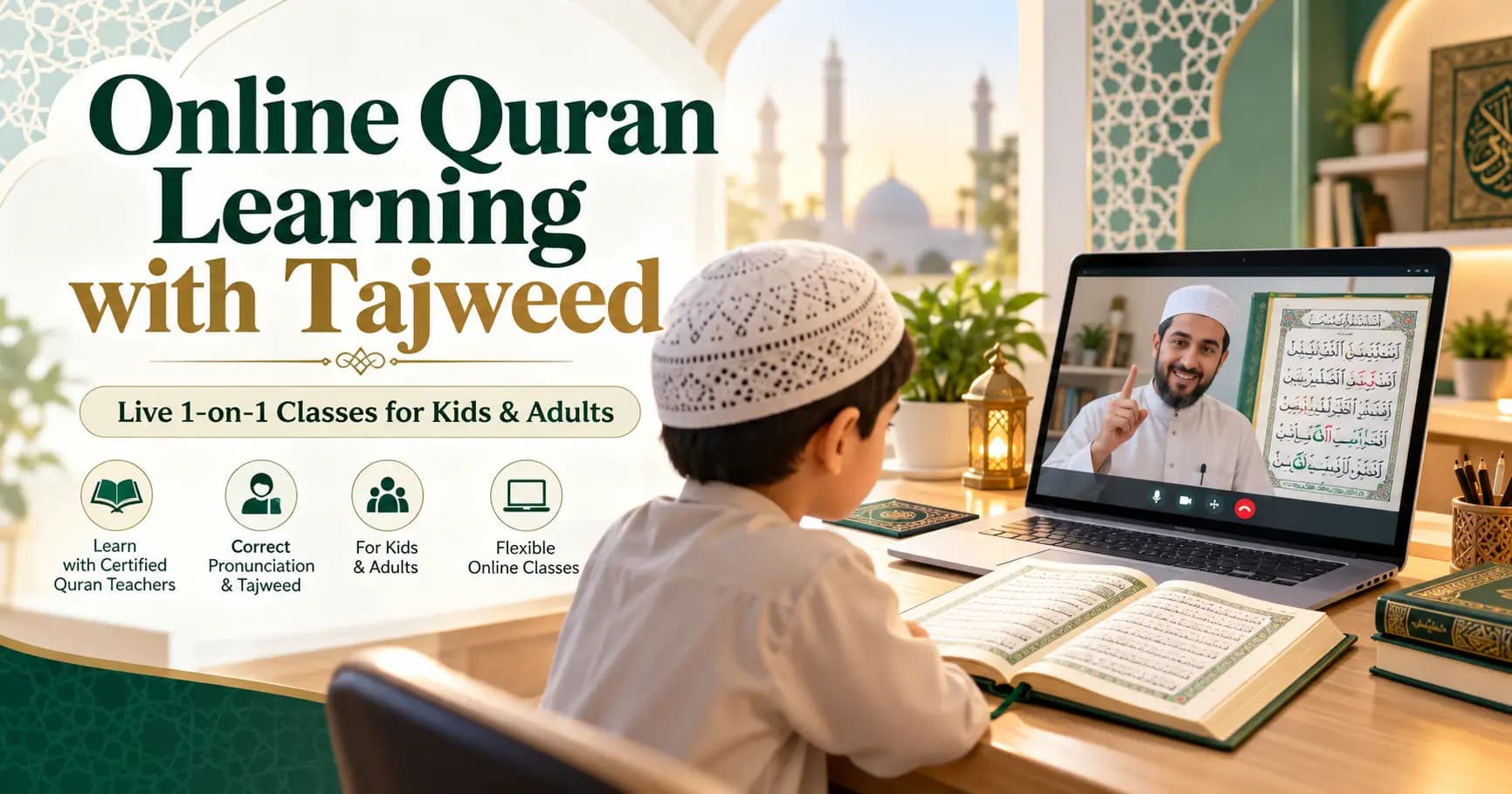
At International Quran Academy, students can learn the Quran from home through one-to-one online lessons. Classes are available for children, adults, complete beginners, and students who want to improve their Quran reading, Tajweed, or memorization.
Before joining regular lessons, new students can book a 3-day free trial. This gives you time to meet the teacher, experience the teaching method, check the class timing, and decide whether the learning environment is right for you or your child.
What Are Online Quran Classes with a Free Trial?
Online Quran classes are live lessons where a student learns directly from a Quran teacher through the internet.
The student can attend from home using a laptop, tablet, computer, or smartphone.
A free trial allows a new student to experience this learning method before enrolling in regular paid classes.
During the first lessons, the teacher can understand the student's current Quran level, pronunciation, reading ability, and learning needs.
A complete beginner may need to start with the Noorani Qaida Course, while someone who already understands basic Arabic reading may be ready for Quran reading or Tajweed.
The purpose is to start from the level that actually suits the student.
Why Start with a Free Quran Trial?
Choosing a Quran teacher is an important decision.
A teacher may be highly knowledgeable, but the student's comfort, communication style, pace, and individual learning needs also matter.
This is why a trial lesson can be useful.
During your free trial, you can observe whether the teacher:
- Explains the lesson clearly
- Gives the student enough time to read
- Corrects mistakes patiently
- Understands the student's current level
- Communicates in a language the student understands
- Maintains a comfortable learning environment
- Keeps younger students engaged
Parents can also see how their child responds to the teacher before committing to a regular schedule.
If you would like to experience the system first, you can start your free Quran trial here.
Learn Quran Online from Home
One of the biggest advantages of online Quran education is convenience.
Families today often have busy routines involving school, work, homework, household responsibilities, and other commitments.
Travelling to a mosque, madrasa, or private tutor several times each week may not always be practical.
Online Quran classes make it possible to learn without daily travel.
Students can attend from a quiet place at home while still receiving direct guidance from a teacher.
This is especially useful for Muslims living in areas where finding a suitable Quran teacher nearby is difficult.
It can also help families maintain Quran education when they move to another city or country.
One-to-One Online Quran Classes
Every student learns differently.
Some students quickly understand Arabic letters but need more help with pronunciation. Others can read the Quran but struggle with fluency or Tajweed.
One-to-one classes allow the teacher to focus on those individual needs.
Instead of teaching several students at the same pace, the teacher listens directly to one learner.
When a mistake occurs, it can be corrected immediately.
The student also has more opportunity to read, repeat difficult words, ask questions, and practise without feeling rushed.
Private lessons can be especially helpful for beginners, children, adults returning to Quran learning, and students working on memorization.
Online Quran Classes for Kids
Children need patience and encouragement when learning the Quran.
For many young students, their first experience with Quran education can shape how they feel about learning in the future.
Lessons should therefore be structured without becoming unnecessarily stressful.
At International Quran Academy, parents looking specifically for younger learners can explore our online Quran classes for kids.
A beginner may start by learning Arabic letters and their sounds. The teacher can then gradually introduce joined letters, vowels, words, short verses, and Quran reading.
Parents can also stay involved by observing lessons and helping their child revise between classes.
For children, steady progress usually matters more than trying to complete too much material at once.
Can Adults Learn Quran Online?
Yes. Adults can begin learning the Quran at any age.
Some adults did not have the opportunity to study properly during childhood.
Others learned Quran years ago but now want to improve their reading or correct Tajweed mistakes.
There are also students who can read fluently but want to work on memorization or deeper Quranic studies.
Online classes provide a private environment where an adult can begin from their actual level without feeling embarrassed.
A teacher can first identify what the student already knows and then build lessons around what still needs improvement.
Online Quran Courses You Can Choose
Different students have different goals, so a single course is not suitable for everyone.
International Quran Academy offers Quran and Islamic learning programs for different ages and levels.
Noorani Qaida for Beginners
For students who are new to Arabic reading, the Noorani Qaida Course provides a structured starting point.
Students learn Arabic letters, their sounds, joined forms, vowels, Sukoon, Shaddah, Madd, Tanween, and other basic reading principles.
Building this foundation carefully can make later Quran reading much easier.
Instead of rushing into full verses, beginners first learn how Arabic words are formed and pronounced.
Quran Reading and Nazra
Students who understand the basic Arabic alphabet can move towards regular Quran reading.
The Nazra Quran Course focuses on helping students improve reading accuracy, pronunciation, and fluency.
During lessons, the student reads directly to the teacher.
The teacher listens and corrects mistakes as they happen.
Over time, regular practice can help students become more confident and independent readers.
Learn Quran with Tajweed
Tajweed teaches students how Quranic letters and words should be pronounced during recitation.
Students who want focused guidance can explore the academy's online Tajweed Course.
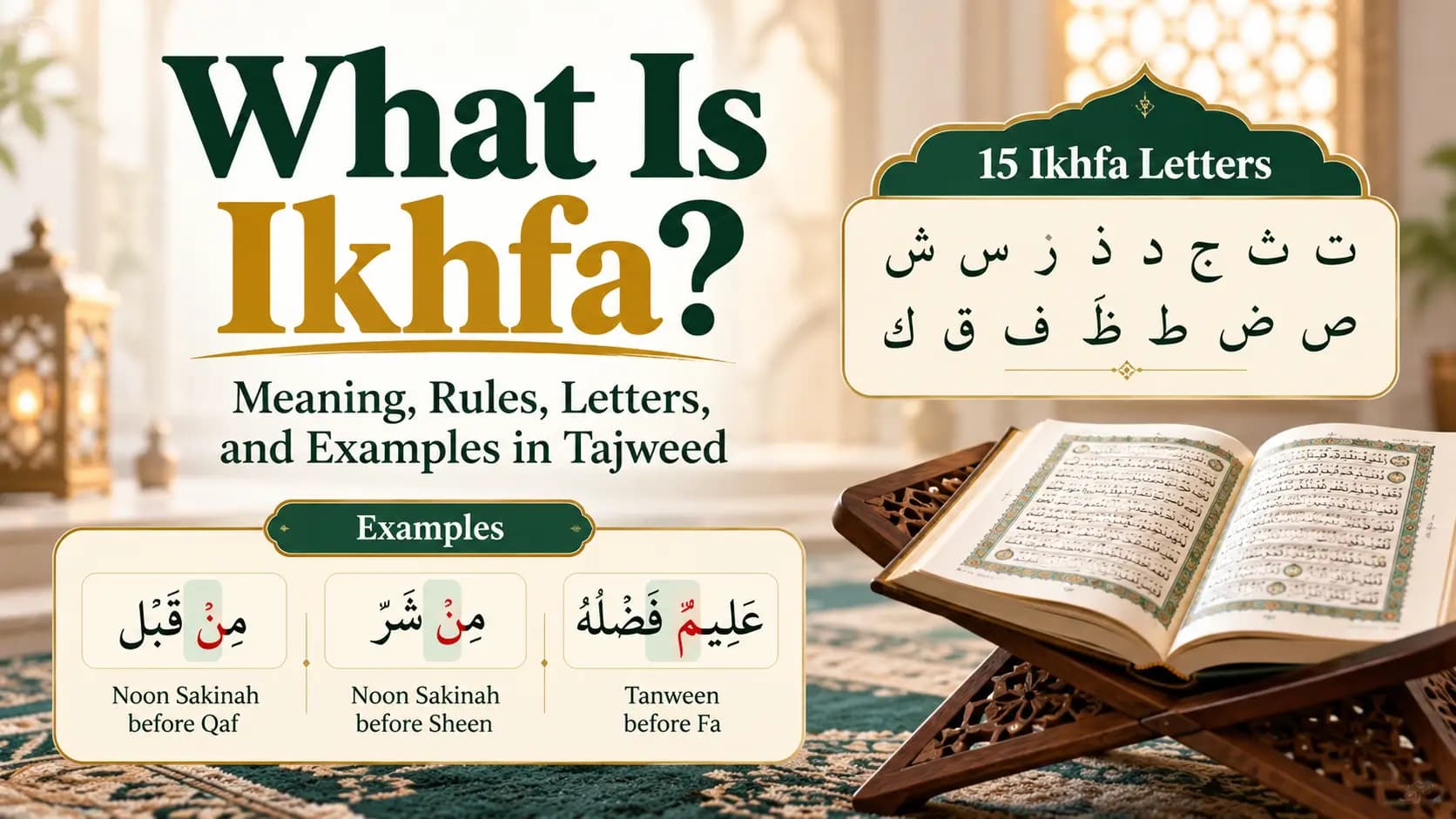
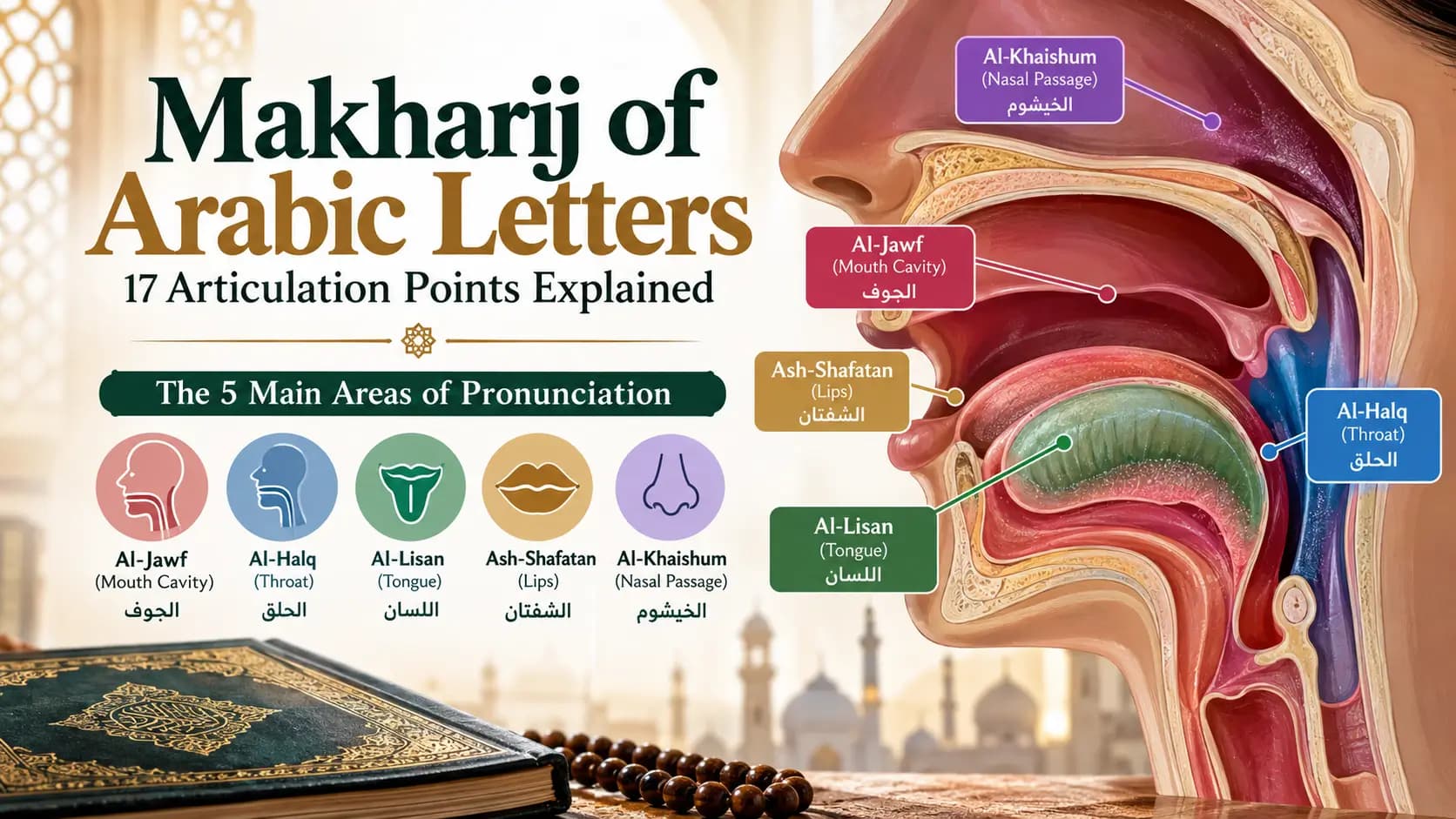
Depending on the student's level, Tajweed lessons may cover Makharij, characteristics of Arabic letters, Madd, Qalqalah, Noon Sakinah, Meem Sakinah, Ghunnah, stopping rules, and other recitation principles.
However, learning Tajweed should not remain only theoretical.
The student needs to apply these rules while actually reciting the Quran.
This is where direct teacher correction becomes valuable.
Quran Memorization and Hifz
Memorizing the Quran requires consistency.
Students need to learn new portions while continuing to revise what they have already memorized.
The Quran Memorization Course is designed for students who want structured Hifz guidance.
The amount memorized each day should depend on the student's ability, age, school routine, available practice time, and strength of revision.
Moving too quickly without proper revision can make memorized portions difficult to retain.
A balanced Hifz routine normally includes both new memorization and previous revision.
Islamic Studies
Quran learning is one part of a child's Islamic education.
Students can also benefit from learning basic beliefs, Salah, duas, Islamic manners, worship, and important lessons from Islamic history.
Parents interested in broader Islamic learning can read about the academy's Islamic Studies Course.
This can help children connect what they learn in Quran lessons with everyday Muslim life.
Male and Female Quran Teachers
Comfort with the teacher can make a major difference in online learning.
Some families prefer a female Quran teacher for their daughters or young children. Other students may prefer a male teacher.
International Quran Academy provides both male and female tutors, subject to availability.
You can also view our Quran teachers to learn more about the teaching team.
When selecting a teacher, it is useful to consider more than gender.
The student's age, learning level, course, language, personality, and goals should also be considered.
A teacher who communicates well with the student can make lessons much more productive.
Flexible Quran Classes for International Students
Online Quran education is not limited by location.
Students can learn while living in the USA, UK, Canada, Australia, Pakistan, UAE, Saudi Arabia, Europe, or many other parts of the world.
Different time zones can be accommodated through flexible class scheduling, depending on teacher availability.
This means Quran lessons can often be arranged around:
- School
- Work
- Homework
- Family commitments
- Different international time zones
- Other regular activities
When choosing a schedule, consistency should be the priority.
A realistic timetable that the student can follow every week is usually better than choosing too many classes and missing them regularly.
What Happens During a Free Quran Trial?
The process is straightforward.
First, you provide some basic information about the student.
This may include the student's age, current Quran level, preferred course, teacher preference, suitable days, class timing, and language.
You can begin through the academy's free trial registration page.
Once the details are reviewed, a suitable class can be arranged.
During the trial lesson, the teacher may first assess the student's level.
If the student already reads Quran, they may be asked to read a short passage.
If the student is a complete beginner, the teacher can begin with Arabic letters or Qaida.
This assessment is not an exam.
Its purpose is simply to find a suitable starting point.
What Should Parents Check During the Trial?
Parents should focus on the quality of interaction rather than simply counting how many lines or pages were completed.
Watch how the teacher reacts when the child makes a mistake.
A good teacher should correct errors clearly without making the student afraid to try again.
You can also check whether the teacher allows enough time for the student to read.
For younger children, notice whether the teacher can keep their attention while remaining patient.
By the end of the trial, you should have a clearer answer to questions such as:
Does my child feel comfortable with this teacher?
Is the teaching easy to understand?
Is the class level appropriate?
Can we maintain this schedule regularly?
Would we be happy continuing these lessons?
Those questions are usually more useful than judging a class only by speed.
How Many Quran Classes Should a Student Take?
There is no perfect number for every student.
Some learners may do well with two or three classes per week.
Students who want faster progress may prefer four or five lessons.
Hifz students may require a more regular routine because memorization depends heavily on repetition and revision.
Young children may benefit from shorter but consistent lessons.
The right schedule depends on age, learning goals, attention span, school commitments, and available practice time.
Families considering regular enrollment can also review the academy's Quran class fee plans before choosing their preferred schedule.
What Do You Need for an Online Quran Class?
You do not need complicated equipment to begin.
A student generally needs:
- A reliable internet connection
- A laptop, computer, tablet, or smartphone
- Working audio
- A quiet place to study
- Quran or Qaida learning material when required
Headphones can be useful because they help students hear pronunciation more clearly.
For a young child, having a parent nearby during the first few lessons may also help until the student becomes familiar with the teacher and class routine.
Are Online Quran Classes Effective?
Online Quran classes can be effective when the learning is live, interactive, and consistent.
Watching prerecorded videos alone is different from reading directly to a teacher.
Quran recitation requires listening and correction.
A live teacher can identify pronunciation errors, ask the student to repeat difficult sounds, demonstrate the correct way to read, and monitor improvement.
Students also need to practise between lessons.
The teacher provides guidance, but long-term improvement depends on regular attendance and revision.
Online Quran Learning for Different Levels
One benefit of private online classes is that students do not have to begin from the same point.
A complete beginner may start with Qaida.
Another student may already be reading Quran but need help with fluency.
Someone else may have strong reading skills and want to improve Tajweed.
A Hifz student may need more support with revision than new memorization.
Each of these students has a different need.
The learning plan should reflect that.
How to Choose the Right Online Quran Academy
Before enrolling, consider how the academy actually teaches.
Check whether classes are live and whether students receive direct feedback.
Ask whether one-to-one lessons are available.
Consider teacher availability, class scheduling, communication, course options, and how the student's progress will be handled.
It is also useful to experience a lesson yourself.
That is one of the main advantages of choosing online Quran classes with a free trial rather than committing before seeing how the teaching works.
Why Choose International Quran Academy?
International Quran Academy provides online Quran and Islamic education to students from different countries and age groups.
Students can study through live, individual lessons from home.
Course options include beginner Qaida, Quran reading, Tajweed, Hifz, Islamic Studies, and other Quranic programs.
Students can also choose between male and female teachers according to their needs and teacher availability.
Most importantly, new students do not have to make their decision based only on written information.
The free trial gives them the opportunity to experience the learning environment first.
Start Online Quran Classes with a Free Trial
You do not need to wait until you already know how to read Arabic to begin learning Quran.
You can start from your current level.
A child may begin with Arabic letters.
An adult may restart from Noorani Qaida.
Another student may focus on correcting Tajweed or beginning Hifz.
What matters is starting with the right teacher, course, and learning plan.
If you are ready to begin, book your 3-day free Quran trial and experience a live online class before deciding whether to continue.
Frequently Asked Questions
Do you offer online Quran classes with a free trial?
Yes. International Quran Academy offers new students a free trial so they can experience live lessons before joining regular classes.
How many free trial classes are available?
New students can currently register for a 3-day free trial through the academy's trial registration page.
Can complete beginners join?
Yes. Beginners can start with Noorani Qaida and gradually progress to Quran reading.
Are online Quran classes available for kids?
Yes. Children can take private online Quran lessons according to their age and current learning level.
Can adults learn Quran online?
Yes. Adults can start from basic Quran reading or join more advanced programs such as Tajweed and Hifz according to their existing level.
Can I choose a female Quran teacher?
Male and female Quran teachers are available. Teacher assignment depends on the student's preference, course requirements, and availability.
Which Quran courses can I study online?
Students can study Noorani Qaida, Nazra Quran, Tajweed, Quran memorization, Islamic Studies, and other Quran and Islamic education programs.
How many classes should I take each week?
The right schedule depends on your goals and availability. Some students choose two or three lessons per week, while others prefer four or five.
What device can I use?
Students can generally attend using a computer, laptop, tablet, or smartphone with a reliable internet connection and working audio.
Can international students join?
Yes. Online Quran classes allow students living in different countries and time zones to study remotely.
How do I begin?
Choose your preferred course and submit your details through the free trial registration page. The academy can then arrange a suitable starting point based on your requirements.